


If you’re searching for how to find a financial advisor, you’re asking the right question at the right time. The difference between a mediocre advisor and a truly excellent one can shape your retirement security, your estate, and the financial legacy you leave behind — especially when your investable assets are in the seven-figure range.
This guide is written specifically for successful executives, business owners, retirees, and professional athletes who have accumulated meaningful wealth and are ready for advice that matches their situation.
What’s the Best Way to Find a Financial Advisor?
The best way to find a financial advisor is to use a three-step filter: first, verify fiduciary status and credentials (look for CFP®, CFA, or similar designations); second, understand exactly how they’re compensated; and third, confirm they regularly serve clients with a financial profile similar to yours. Referrals, regulator databases, and direct interviews complete the process.
The sections below will walk you through each of those steps in detail — with a specific focus on what high-net-worth investors need to look for that most general guides overlook.

Why Finding the Right Financial Advisor Matters More at High Net Worth
Most articles about finding a financial advisor are written for someone with a modest 401(k) and a few investment accounts. If that’s your situation, general guidance works fine. But when you’re managing a $2M portfolio, a concentrated stock position, a business interest, or a complex estate, generic advice isn’t just unhelpful — it can be costly.
The High-Net-Worth Advice Gap
The strategies that matter most above $1M in investable assets — Roth conversion ladders, tax-loss harvesting at scale, qualified opportunity zone investments, irrevocable trust structures, charitable remainder trusts — are rarely discussed at national brokerage firms that serve clients across all wealth levels. You need an advisor who spends their day thinking about these problems, not one who occasionally encounters them.
Consider the difference between two types of advisors:
| Characteristic | Mass-Market Advisor | HNW-Focused Advisor |
|---|---|---|
| Typical focus | Broad range of asset levels | More complex balance sheets, often with a $500K+ minimum |
| Planning depth | Retirement savings, basic asset allocation | Estate planning, tax strategy, trust coordination |
| Compensation model | Often commission-driven or AUM plus commissions | Fee-based, with disclosed insurance compensation |
| Fiduciary standard | May apply suitability standard in brokerage capacity | Fiduciary standard for investment advisory services |
| Tax coordination | Minimal or siloed from CPA | Integrated with your tax and legal team |
What “Outgrowing Your Advisor” Looks Like
A common pattern: an advisory relationship that worked well during the accumulation years stops keeping pace once wealth becomes more complex. Questions about IRMAA surcharges, concentrated equity positions, or business succession start getting vague answers.
If that resonates, it may be time to find a financial advisor who specifically serves clients at your wealth level.
Step 1: Determine What Type of Advisor You Actually Need
Not all financial advisors do the same thing. Before you begin searching, clarify what you need.
Financial Planner vs. Investment Manager vs. Wealth Manager
- Financial planners focus on comprehensive planning: budgeting, insurance, retirement projections, and goal-setting. The CFP® designation is the gold standard here.
- Investment managers focus primarily on portfolio construction, asset allocation, and investment selection.
- Wealth managers integrate both — and typically add estate planning coordination, tax strategy, business planning, and sometimes family office services. This is what most high-net-worth individuals actually need.
If your net worth is approaching or above $1M in investable assets, a comprehensive wealth manager is almost certainly the right fit. Piecemeal advice from separate specialists who don’t coordinate with each other is one of the most common — and expensive — mistakes affluent families make.
Understand the Difference Between Broker-Dealers and Registered Investment Advisers
This distinction matters enormously. Broker-dealers are held to a “suitability” standard — they must recommend products that are “suitable” for you, which is a lower bar than what a fiduciary is required to meet. Registered investment advisers (RIAs) who act as fiduciaries are required to act in your best interest when providing investment advisory services.
You can verify an advisor’s registration and disciplinary history through SEC.gov’s investor resources and through FINRA’s BrokerCheck.
Step 2: Understand Compensation Models Before You Search
How an advisor is paid shapes the advice they give — whether consciously or not. When you set out to find a financial advisor, this is one of the first filters to apply.
Fee-Based vs. Commission-Based: What You Need to Know
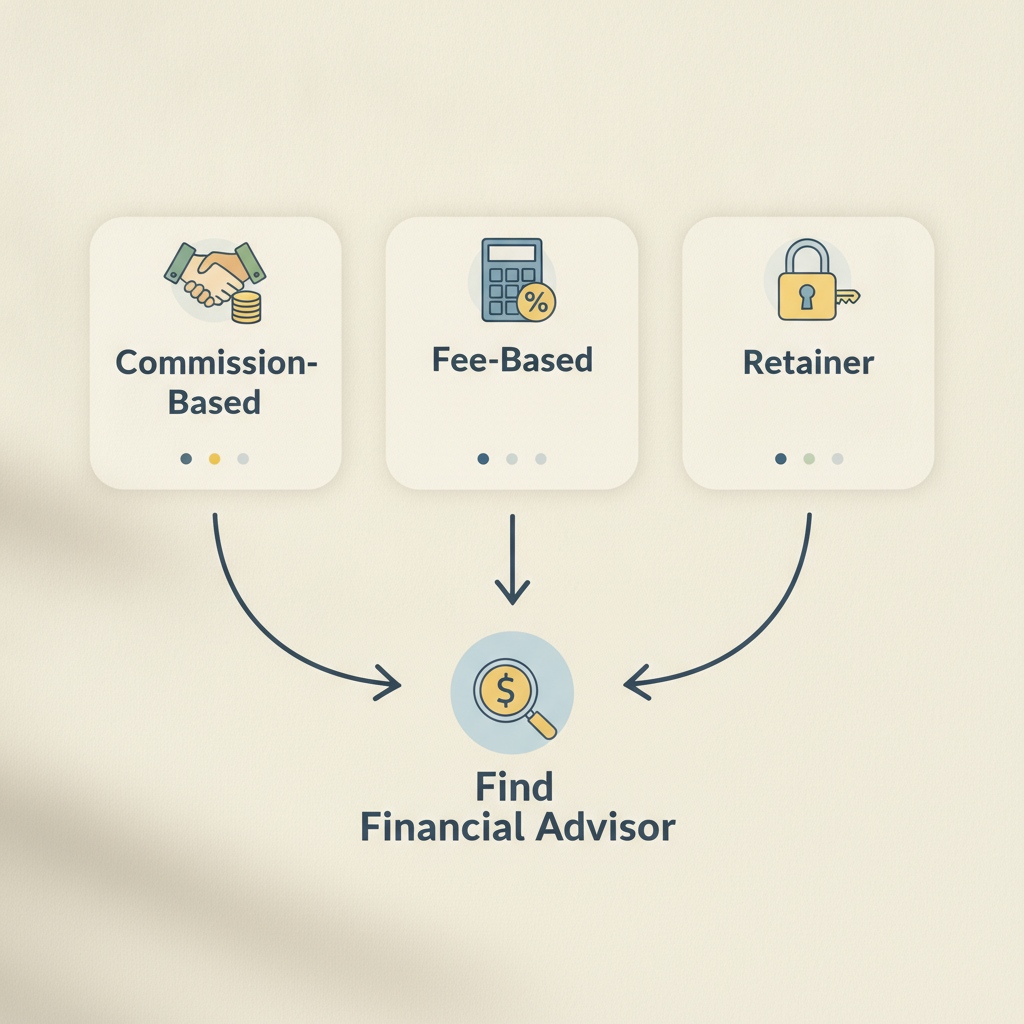
Commission-based advisors earn money when they sell you products — annuities, life insurance, mutual funds with sales loads. There’s nothing inherently wrong with this, but you need to know it and understand how it may influence recommendations.
Fee-based advisors charge clients directly — either as a percentage of assets under management, a flat annual retainer, or an hourly fee. Some fee-based advisors also receive compensation on insurance or annuity products, which must be disclosed to you. Ask for full transparency on every dollar the advisor receives in connection with your account.
Davies Wealth Management is a fee-based investment adviser. When providing investment-advisory services, we act as fiduciaries. Compensation on any insurance or annuity products is separately disclosed. Our minimum is $500,000 in investable assets. You can learn more about our comprehensive wealth management services.
Questions to Ask About Compensation
- What is your total annual fee, expressed in dollars, for a client like me?
- Do you receive any compensation from third parties — including insurance companies or fund families?
- Are there any transaction fees, surrender charges, or hidden costs I should know about?
- Do you earn more if I buy a particular product? How is that disclosed?
Step 3: Verify Credentials and Fiduciary Status
Credentials matter — but they’re not all created equal. When you find a financial advisor candidate, check what letters they carry after their name and what those designations actually require.
The Credentials That Signal Serious Expertise
- CFP® (Certified Financial Planner) — requires education, a comprehensive exam, thousands of hours of experience, and ongoing ethics training. The gold standard for comprehensive financial planning. Verify at CFP Board’s official verification tool.
- CFA® (Chartered Financial Analyst) — rigorous, three-level program focused on investment analysis and portfolio management. Highly respected in investment management.
- CPWA® (Certified Private Wealth Adviser) — specifically designed for advisors working with high-net-worth clients. Covers advanced planning topics including tax strategy, estate planning, and alternative investments.
- CPA/PFS (Personal Financial Specialist) — a CPA who has also earned financial planning credentials. Particularly valuable for clients with complex tax situations.
How to Verify an Advisor’s Fiduciary Status
Ask directly: “Are you acting as a fiduciary for all of the services you’ll provide to me?” Then ask them to confirm it in writing. A qualified advisor won’t hesitate to answer clearly.
Note that some advisors wear two hats — they may be a fiduciary for investment advisory services but shift to a suitability standard when recommending insurance or annuity products. Understanding which hat they’re wearing at any given moment protects you.
How to Check for Disciplinary History
Before engaging any advisor, run them through these tools:
- SEC’s Investment Adviser Public Disclosure (IAPD) — search for RIA firms and individual investment adviser representatives
- FINRA BrokerCheck — for advisors who also hold brokerage licenses
- Your state securities regulator — for state-registered advisers
Any disclosure, customer complaint, or regulatory action is worth discussing directly with the advisor. The explanation matters as much as the event.
Step 4: Use Multiple Channels to Find a Financial Advisor
The search itself has multiple entry points. Using several simultaneously improves your chances of finding the right fit.
Referrals from Trusted Professionals
Your CPA, estate attorney, or business banker often knows which advisors in your area have the depth to handle complex situations. A referral from someone who has seen an advisor perform under pressure — during a market downturn, a business sale, or a divorce — is worth more than any directory listing.
Ask specifically: “Which advisor do you refer your most complex clients to?” That question gets you a different answer than a general recommendation.
Peer Referrals Within Your Network
Executives, business owners, and retirees with similar financial profiles are often the best sources. Ask colleagues who have sold a business, exercised significant stock options, or navigated an inheritance how they found their advisor and what they would do differently.
Curated Advisor Directories
Several directories filter for credentials and business model:
- NAPFA.org — National Association of Personal Financial Advisors, lists advisors with strong planning credentials
- XY Planning Network — subscription-based advisors, many with niche specializations
- Garrett Planning Network — hourly and project-based advisors
- CFP Board’s Advisor Search — search by location and specialty
These directories are a starting point, not a guarantee. Always conduct your own due diligence regardless of the source.
Geographic Considerations for Florida Residents
If you live in or are relocating to Florida, working with an advisor who understands Florida’s specific tax advantages — no state income tax, homestead exemption, favorable trust laws — adds significant value. Florida has become one of the top destinations for high-net-worth retirees and executives precisely because of its favorable financial environment.
Step 5: Conduct a Thorough Interview
The advisor interview is your most powerful tool. Don’t skip it or rush it. Plan to speak with at least two or three candidates before making a decision.
Questions That Reveal Whether an Advisor Is Right for You
- “Who is your ideal client?” — If your profile doesn’t match, that’s important to know early.
- “How do you handle a concentrated stock position?” — This tests their technical depth. A good answer covers diversification strategies, tax management, exchange funds, and charitable options.
- “How do you coordinate with my CPA and estate attorney?” — High-net-worth planning requires team coordination. Siloed advisors create gaps.
- “Walk me through how you handled a client portfolio during a significant market decline.” — Process and communication matter more than performance claims.
- “What would you change about my current financial picture after reviewing it?” — A good advisor should have preliminary observations, not just compliments.
Red Flags to Watch For
- Guarantees of specific returns or outcomes
- Vague or evasive answers about compensation
- Pressure to move quickly or transfer assets before you’ve done your research
- An inability to explain their investment philosophy in plain language
- A lack of interest in your full financial picture — taxes, estate, insurance, cash flow
Step 6: Evaluate Fit Beyond the Resume
Technical competence is necessary but not sufficient. You will share sensitive financial information with this person for potentially decades. Chemistry, communication style, and mutual respect matter.
Communication Style and Availability
Ask how frequently you’ll receive proactive outreach — not just during reviews, but when markets move, tax laws change, or planning opportunities arise. High-net-worth clients should expect proactive communication, not reactive check-ins.
Also ask: who handles your account when the lead advisor is unavailable? Understanding the team structure protects you from service gaps.
Planning Philosophy Alignment
Some advisors are growth-oriented. Others emphasize capital preservation and income. Some integrate tax planning deeply; others treat it as secondary. There’s no universally right answer — but there is a right answer for your goals, timeline, and risk tolerance. Make sure their philosophy aligns with yours before signing anything.

Step 7: Review the Agreement Before You Sign
Before you officially engage an advisor, read the advisory agreement and Form ADV carefully. The ADV is a disclosure document that registered investment advisers are required to provide — it describes the firm’s business, fees, conflicts of interest, and disciplinary history.
What to Look for in Form ADV
- Part 1: Registration details, ownership, and any disciplinary actions
- Part 2A (Firm Brochure): Services offered, fee schedule, and business practices
- Part 2B (Supplement): Background of the specific individuals who will advise you
- Part 3 (CRS — Client Relationship Summary): A plain-English summary of the firm’s services, fees, conflicts, and standards of conduct
If an advisor is reluctant to walk you through these documents, that’s a significant warning sign. Transparency about the relationship protects both parties.
Advanced Considerations for High-Net-Worth Investors
Once you’ve identified a qualified candidate, these additional filters help you distinguish between good advisors and great ones for your specific situation.
Tax Integration: The Differentiator Most Advisors Miss
For high-income earners and those with complex estates, investment management without tax strategy is an incomplete service. Look for an advisor who actively coordinates with your CPA — ideally someone who can run multi-year Roth conversion projections, model tax-loss harvesting impact at scale, and flag IRMAA exposure before it becomes a surcharge on your Medicare premiums.
The IRS’s Net Investment Income Tax (NIIT) adds an additional 3.8% on investment income for higher earners — a detail that advisors serving mass-market clients rarely need to plan around, but that is frequently relevant for high-net-worth households.
Estate Planning Coordination
Under the One Big Beautiful Bill Act, signed July 4, 2025, the federal estate and gift tax exemption is $15,000,000 per individual ($30,000,000 per married couple) for 2026, indexed for inflation thereafter, with no scheduled sunset (see the IRS estate tax overview). This removes much of the urgency-driven planning that dominated the last decade — but it doesn’t eliminate the need for thoughtful estate strategy.
State-level estate taxes, portability elections, step-up in basis planning, dynasty trust structures, and charitable giving vehicles like charitable remainder trusts or donor-advised funds all remain powerful planning tools. Your advisor should understand these and coordinate with your estate attorney on their implementation.
Specialization Matters: Athletes, Business Owners, and Executives
If your wealth is tied to a liquidity event — a business sale, an IPO, a large bonus structure, or an athletic career — you need an advisor with direct experience in that area. The planning considerations for a business owner preparing for a sale differ meaningfully from those of a retiring executive managing deferred compensation and stock options.
Ask specifically: “Have you worked with clients in my situation? What did that planning look like?” The answer tells you whether this advisor has the pattern recognition your situation requires.
Free Download
The Complete Florida Retirement Guide
A comprehensive, plain-English guide to retirement planning in Florida — income strategies, tax considerations, Social Security timing, and healthcare planning for Treasure Coast retirees.
Frequently Asked Questions About How to Find a Financial Advisor
How do I find a financial advisor who is a true fiduciary?
Ask directly, in writing, whether the advisor acts as a fiduciary for investment advisory services and request that they confirm the scope of that duty. You can also verify registration and check for disclosed conflicts in their Form ADV, available through the SEC’s IAPD database. A fiduciary for investment advisory services is legally required to act in your best interest in that capacity.
What is the difference between a fee-based and a commission-based advisor?
Fee-based advisors charge clients directly through AUM fees, retainers, or hourly rates, and may also receive compensation on insurance or annuity products with disclosure. Commission-based advisors earn money primarily through the products they sell. Understanding how your advisor is paid helps you evaluate potential conflicts of interest.
How much money do I need to work with a wealth management firm?
Minimums vary widely by firm. Many solo practitioners have no minimum; boutique wealth management firms often require $500,000 to $1,000,000 or more in investable assets. Davies Wealth Management’s minimum is $500,000 in investable assets, which ensures clients receive the depth of service appropriate for their complexity.
How often should I meet with my financial advisor?
For high-net-worth clients, a minimum of two formal reviews per year is standard, with additional touchpoints when markets move significantly, your tax situation changes, or a life event occurs. The best advisors reach out proactively — you shouldn’t have to initiate every conversation.
What documents should I bring to my first meeting with a financial advisor?
Bring recent tax returns (last two to three years), investment account statements, a summary of any employer benefits including deferred compensation or stock plans, insurance policies, and your estate documents if available. The more complete a picture you can provide, the more useful the initial assessment will be.
Taking the Next Step
Knowing how to find a financial advisor is the first step. Acting on it is what separates those who get their financial house in order from those who keep meaning to.
The right advisor won’t just manage your investments — they’ll coordinate your tax strategy, integrate with your estate planning team, and help you make confident decisions about your wealth at every major transition point. That level of service is worth seeking out, interviewing for carefully, and paying fairly to retain.
If you’re ready to explore whether Davies Wealth Management is the right fit for your situation, we invite you to schedule a discovery conversation. There’s no obligation, and you’ll come away with a clearer picture of where you stand and what a comprehensive wealth management relationship could look like for you.
Thomas Davies began his career in financial services in 1996. Davies Wealth Management, founded in 2009 and headquartered in Stuart, Florida, serves high-net-worth individuals, executives, professional athletes, and business owners. Consult a qualified financial, tax, or legal professional for guidance specific to your situation.
📋 Take Our Financial Wellness Quiz
Not sure where to start? Our quick Financial Wellness Quiz helps you identify the gaps in your current plan — and where a fiduciary advisor could add the most value for your specific situation.
📞 Ready for a Personalized Conversation?
Ready for personalized guidance? Book a complimentary phone call with Davies Wealth Management to discuss your goals, your questions, and whether our approach is the right fit.
This content is for general educational purposes only and does not constitute individualized investment advice. Past performance does not guarantee future results. Investment-advisory services are offered by Davies Wealth Management, LLC, an investment adviser registered with the State of Florida. Registration does not imply a certain level of skill or training. Please consult appropriately qualified financial, tax, or legal professionals regarding your specific circumstances. This content was produced with AI assistance and may contain errors. Please verify any figures or claims before relying on them.
Leave a Reply