

“`html
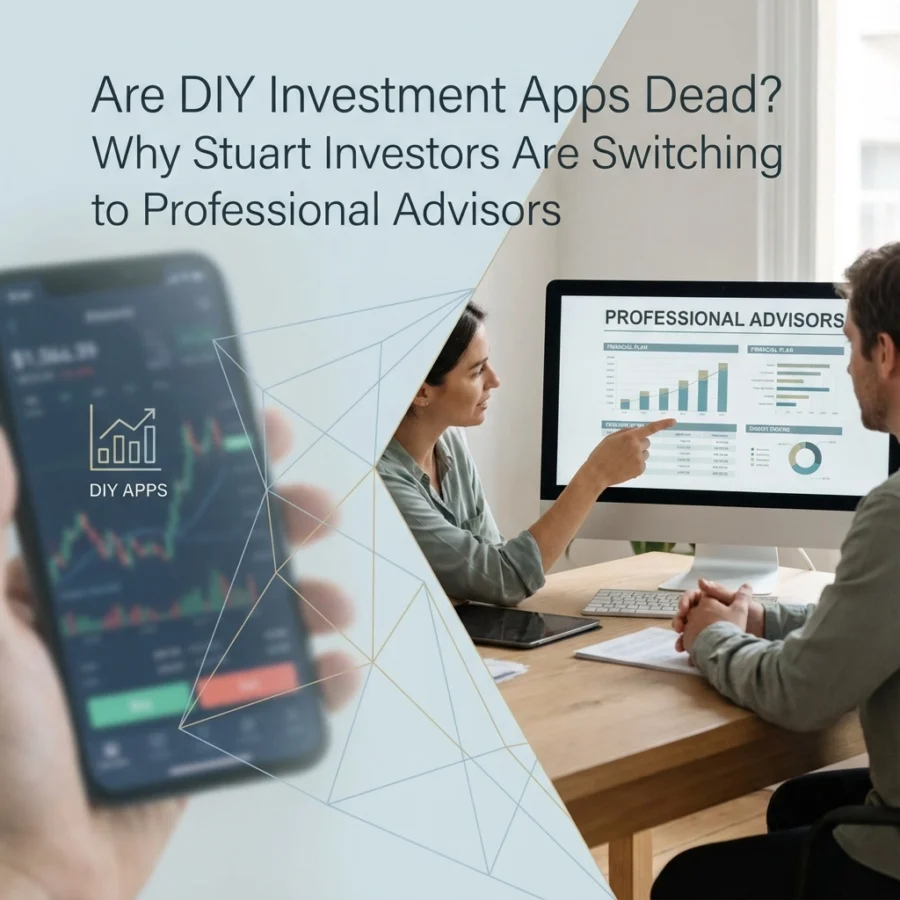
The short answer? DIY investment apps aren’t dead, they’re evolving. But if you’re a Stuart investor who’s been riding the do-it-yourself wave for the past few years, you’re probably noticing something interesting: your investment needs are getting more complex, and that simple app interface isn’t quite cutting it anymore.
Recent data reveals a fascinating shift in investor behavior that’s reshaping how people approach their financial future. While investment apps continue to thrive, a growing number of investors are discovering the power of combining digital tools with professional expertise. Let’s dive into what this means for your portfolio and why so many investors in our area are making this strategic pivot.
The Hybrid Investment Revolution is Here
The most significant trend emerging in 2025 isn’t the death of DIY investing, it’s the birth of hybrid investment management. According to recent studies, investors using digital platforms are nearly twice as likely to also work with a financial planning advisor compared to those who don’t use digital tools at all (62% versus 34%). This data reveals something crucial: technology and human expertise aren’t competitors, they’re powerful allies.
This shift makes perfect sense when you think about it. Your smartphone app excels at executing trades quickly and tracking performance in real-time. But can it help you navigate tax implications when you’re selling your rental property in Stuart? Can it factor in your spouse’s pension benefits or help you understand the estate tax changes coming in 2026? That’s where professional guidance becomes invaluable.

Young Investors Are Leading the Charge Toward Professional Guidance
Here’s where the data gets really interesting: the generation that was supposed to stick with DIY forever is actually driving demand for professional advice. Among current DIY investors, 27% say they’re likely to use a financial advisor in the next 12 months. But when you look at Gen Y and Gen Z investors specifically, that number jumps to 37%.
Why are younger investors, who grew up with technology, seeking human advisors? The answer lies in life complexity. When you’re 22 and investing your first $1,000, an app works great. When you’re 32 with a house, kids, student loans, and a 401(k) that needs rebalancing, you need someone who can see the bigger picture.
For Stuart residents, this trend is particularly relevant. Our area attracts many young professionals who relocate from other states, bringing diverse financial backgrounds and varying levels of investment experience. Many discover that Florida’s unique tax advantages require strategies that go beyond what any app can provide.
What DIY Apps Do Well (And Where They Fall Short)
Let’s be fair to investment apps, they’ve democratized investing in remarkable ways. They make it easy to start investing with small amounts, they’re accessible 24/7, and they’ve eliminated many traditional barriers to entry. Apps have made investors twice as active in tax-efficient investing (66% versus 32% for non-app users), which is genuinely impressive.
But here’s where things get complicated: 41% of DIY investors stick with apps because their finances are “simple enough” to manage independently. The keyword here is “simple.” If your financial situation fits into neat, predefined categories, apps work beautifully. But life has a way of becoming less simple over time.

Consider these scenarios that regularly come up for Stuart area investors:
- You inherit property from a relative in another state
- Your employer offers stock options with complex vesting schedules
- You want to help fund your child’s education while maximizing tax benefits
- You’re considering early retirement but need to bridge healthcare coverage
- You own a small business and need to coordinate personal and business investment strategies
These situations require nuanced analysis that considers federal tax laws, Florida-specific regulations, and your unique circumstances. Even the most sophisticated robo-advisor struggles with this level of personalization.
The AI Reality Check
Speaking of technology limitations, let’s address the elephant in the room: artificial intelligence. While 53% of investors use generative AI monthly for financial research, only 30% would actually rely on AI for financial decisions. This gap reveals something important about human psychology and financial planning.
AI can crunch numbers faster than any human, but it can’t factor in your anxiety about market volatility or your dreams of starting a nonprofit in retirement. It can’t read between the lines when you’re discussing your concerns about your aging parents’ long-term care needs. Professional advisors bring emotional intelligence and contextual understanding that technology simply cannot replicate.
Why Stuart Investors Are Making the Switch
Local factors play a significant role in why Stuart area investors are increasingly seeking professional guidance. Florida’s lack of state income tax creates unique opportunities for tax planning, but it also means you need someone who understands the full scope of federal tax implications.
Additionally, Stuart’s growing population of retirees from high-tax states brings complex financial situations. These investors often have multiple retirement accounts, real estate in different states, and sophisticated estate planning needs. A DIY app that worked perfectly in New York might miss crucial optimization opportunities in Florida.
The professional advisors at Davies Wealth Management regularly see clients who started with apps but realized they needed more comprehensive strategies as their wealth grew. It’s not about abandoning technology, it’s about leveraging it within a broader framework of professional guidance.
The Cost-Benefit Analysis That’s Changing Everything
One of the most common objections to professional financial advice is cost. Many investors assume that DIY investing is “free” while working with an advisor is expensive. But this perspective misses the bigger picture.
Yes, investment apps typically charge lower fees upfront. But what about the cost of missed opportunities? Poor tax planning? Inadequate risk management? These hidden costs can dwarf management fees over time.
Professional investment management services provide value that extends far beyond stock picking. They offer tax-loss harvesting, asset allocation optimization, estate planning coordination, and behavioral coaching that helps you stick to your long-term strategy when markets get volatile.
For Stuart investors, professional guidance often pays for itself through tax optimization alone. Understanding Florida’s unique tax environment while maximizing federal tax benefits requires expertise that no app currently provides.
Finding the Right Balance for Your Situation
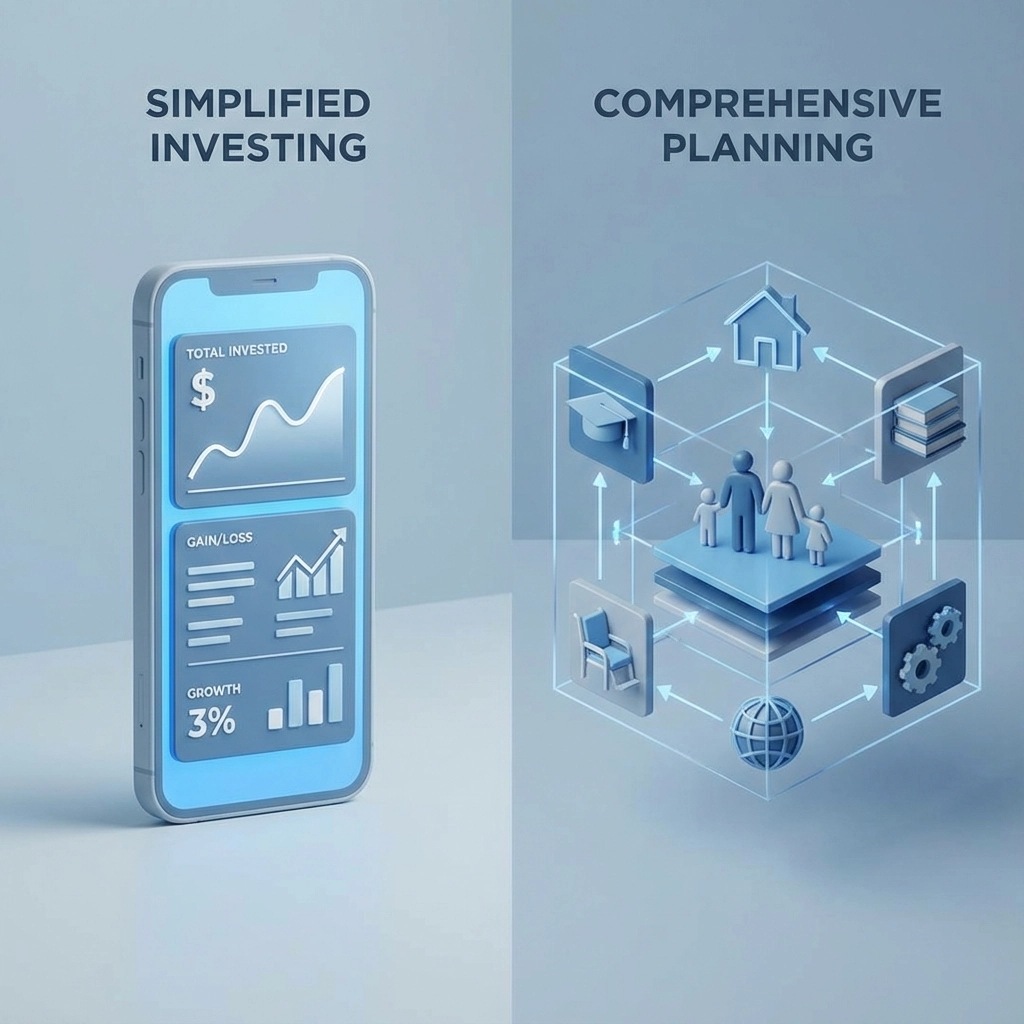
The future of investing isn’t about choosing between technology and human advice: it’s about finding the right combination for your unique needs. This might mean using apps for tactical trading while working with a professional advisor for strategic planning. Or it might mean having a comprehensive relationship with an independent financial advisor who incorporates cutting-edge technology into their process.
The key is honest self-assessment. Are your financial needs truly simple enough for a DIY approach? Do you have the time, knowledge, and emotional discipline to manage your investments effectively? Can you optimize for taxes, plan for estate considerations, and coordinate multiple account types on your own?
If you’re considering this transition, remember that working with a professional doesn’t mean giving up control. The best advisory relationships are collaborative, where technology enhances rather than replaces human insight.
Looking Ahead: The Evolution Continues
As we move through 2025, expect the line between DIY and professional investment management to continue blurring. The most successful investors will be those who leverage the best of both worlds: using technology for efficiency and accessibility while relying on human expertise for strategy and guidance.
For Stuart area investors, this evolution represents an opportunity to optimize their financial strategies for both current market conditions and Florida’s unique advantages. Whether you’re just starting to question your DIY approach or actively seeking professional guidance, understanding these trends can help you make more informed decisions about your financial future.
The conversation about DIY versus professional investing doesn’t have to be either-or. Instead, consider how you can create an investment approach that combines the convenience of technology with the wisdom of professional experience. Your future self will thank you for taking this comprehensive view.
For more insights on wealth management and investment strategies, check out our podcast at www.1715tcf.com, where we regularly discuss these evolving trends and their implications for Florida investors.
This content is for educational purposes only and does not constitute investment advice. Past performance is not indicative of future results. Advisory services offered through Davies Wealth Management, a Registered Investment Adviser. Please consult a qualified financial, tax, or legal professional regarding your specific situation.
“`
Leave a Reply