

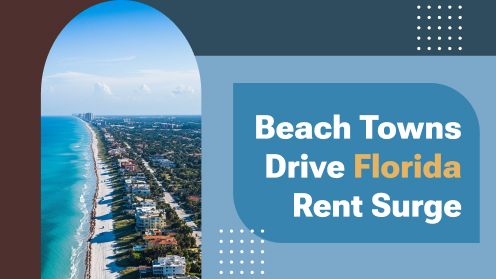
Florida beach towns are driving rent increases, surpassing the national average in early 2025.
Smaller beach towns like Naples, Port St. Lucie, and North Port are seeing growing demand.
Why Florida’s Coastal Markets Are Outpacing the Rest of the Country
When national headlines talk about rent trends, they tend to focus on large metropolitan areas — New York, Los Angeles, Chicago. But in early 2025, some of the most notable rent movement in the United States is happening in a different kind of place entirely: Florida’s smaller beach towns. From the Gulf Coast to the Treasure Coast, communities that were once considered hidden gems are now drawing sustained attention from renters, retirees, remote workers, and seasonal residents alike.
Understanding why this is happening — and what it means for residents, property owners, and those planning their financial lives on the Treasure Coast — requires looking at the broader forces reshaping where and how people choose to live.
The Demand Side: Who Is Moving to Florida’s Smaller Coastal Towns?
Florida has long been a destination state, but the profile of who is arriving has shifted meaningfully in recent years. Several overlapping groups are fueling rental demand in beach-adjacent communities:
Remote and Hybrid Workers
The normalization of remote and hybrid work arrangements has untethered many professionals from expensive urban centers. When location becomes flexible, quality of life rises to the top of the decision-making process. Florida’s beach towns — with their warm climate, access to outdoor recreation, and comparatively lower cost of living than coastal cities in the Northeast or California — become genuinely competitive options. Communities like Port St. Lucie, which sits along the Treasure Coast, offer the lifestyle appeal of coastal Florida without the price tag historically associated with Miami or Palm Beach. Those considering moving to Florida will find the Treasure Coast increasingly on the radar as a practical and appealing alternative.
Retirees and Pre-Retirees
Florida has attracted retirees for generations, but the wave of baby boomers moving through peak retirement years is adding volume to an already consistent trend. Many are choosing to rent before committing to a purchase, or they prefer renting as a long-term lifestyle choice that reduces maintenance responsibilities. Smaller beach towns offer proximity to healthcare, leisure, and community — factors that matter greatly in retirement planning.
Seasonal and Lifestyle Renters
Florida’s tourism-driven culture means a meaningful share of rental demand comes from people who split their time between states. This segment competes for the same housing stock as long-term renters, which tightens availability and puts upward pressure on prices — particularly in towns like Naples, where the seasonal population is substantial.
The Supply Side: Why New Inventory Hasn’t Kept Pace
Demand alone does not explain rent increases. The other half of the equation is supply — and in many of Florida’s smaller coastal communities, housing supply has struggled to keep pace with incoming demand for a variety of reasons.
Geographic and Regulatory Constraints
Beach towns are, by definition, geographically constrained. Water on one side limits the direction in which a community can expand. Zoning regulations, environmental protections, and land-use restrictions further limit the pace at which new housing — whether single-family rentals, apartment complexes, or mixed-use developments — can be brought to market. This is particularly true in established communities where residents and local governments have a vested interest in managing density.
Construction Cost Pressures
Building in coastal Florida carries its own set of financial considerations, including stricter building codes designed to withstand hurricane conditions, insurance requirements for new construction, and the cost of materials and labor in markets where demand for skilled tradespeople remains elevated. These factors make it more expensive to build new rental inventory, which in turn affects how quickly developers are willing to bring new units online.
Insurance Complexity
Florida’s property insurance landscape has been widely discussed as a complicating factor in the real estate market broadly. For property owners and landlords, rising insurance costs can affect the economics of renting — sometimes influencing whether a property remains in the rental market at all, or what rent level is necessary to cover carrying costs.
What This Means for the Treasure Coast
Port St. Lucie and the broader Treasure Coast region sit at an interesting intersection of these trends. The area offers genuine coastal Florida living — proximity to beaches, warm weather, outdoor amenities, and a growing local economy — while remaining more accessible than some of the state’s more established luxury markets. That positioning makes it particularly attractive to the demographic groups driving rental demand statewide.
For residents of the Treasure Coast, rising rents carry real implications for monthly budgets and longer-term financial planning. Whether you are currently renting, own a property and are considering its role in your financial picture, or are weighing a transition from renting to ownership, these market dynamics are worth understanding in context — not in isolation.
Connecting Housing Costs to Your Broader Financial Plan
Rent is not just a line item on a monthly budget. For many people, it is one of the largest single expenditures they carry, and changes in rental costs ripple outward into savings rates, investment capacity, retirement timelines, and emergency fund adequacy. When rents rise faster than income, the financial flexibility that supports other goals can quietly erode.
This is one reason why housing decisions deserve thoughtful integration into a comprehensive financial plan — not a reaction driven by short-term market noise. Questions worth examining include how your current housing costs align with your longer-term goals, whether your savings strategy accounts for continued cost-of-living shifts in your area, and how your housing situation fits within your overall asset picture.
Practical Steps for Navigating a Changing Rental Market
- Revisit your budget with current numbers. If your rent has increased or is likely to, update your monthly cash flow picture before making other financial decisions.
- Evaluate your emergency fund. Higher fixed expenses mean the cushion you carry may need to be proportionally larger to cover unexpected disruptions.
- Consider the rent-versus-own question carefully. Market conditions affect this calculus differently for everyone depending on income stability, time horizon, and personal priorities. There is no universal right answer.
- Factor housing into retirement income planning. If you are approaching retirement in a market where rents are rising, projecting future housing costs conservatively is an important part of building a durable income plan.
Closing Takeaway
Florida’s beach towns — including communities right here on the Treasure Coast — are experiencing genuine, sustained rental demand that is reshaping local housing markets. For renters, property owners, and anyone planning their financial life in this region, these trends are not just background noise. They are material inputs to thoughtful financial decision-making. At Davies Wealth Management, our fee-based fiduciary approach means we look at your full financial picture — including how housing fits within it — to help you make decisions that are grounded in your specific goals and circumstances.
This content is for educational purposes only and does not constitute investment advice. Past performance is not indicative of future results. Advisory services offered through Davies Wealth Management, a Registered Investment Adviser. Please consult a qualified financial, tax, or legal professional regarding your specific situation.
Leave a Reply