

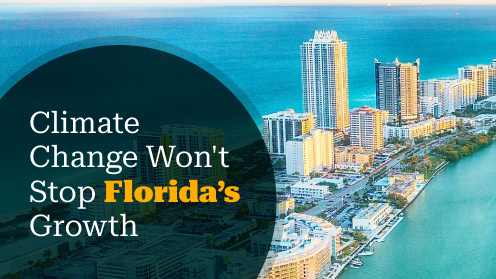
How Florida’s Housing Boom Defies Climate Concerns
Florida’s real estate market has long captured national attention, and in recent years that attention has carried an undercurrent of skepticism. Rising sea levels, intensifying storm seasons, and broader climate conversations have led many outside observers to question whether the Sunshine State’s housing boom can sustain itself. Yet demand for Florida homes — particularly along the Treasure Coast and communities like Stuart, Port St. Lucie, and Hobe Sound — remains remarkably resilient. Understanding why requires a closer look at the structural, regulatory, and lifestyle factors that continue to draw residents and real estate investment to the state.
Despite climate change fears, Florida's housing market continues to thrive due to strong construction standards and opportunities. Strict building codes protect homes in Florida, with construction able to withstand winds up to 140 mph.
The Building Code Advantage
One of the most compelling counterpoints to climate-related concern is Florida’s reputation for some of the most rigorous residential building standards in the country. As noted above, construction in Florida is engineered to withstand winds up to 140 mph — a benchmark that reflects decades of hard lessons learned from major storm events. These standards are not aspirational; they are codified into law and enforced through the permitting and inspection process at the local level.
What this means practically for a homeowner or buyer is significant. Newer construction — and homes that have undergone required upgrades — feature impact-resistant windows and doors, reinforced roof-to-wall connections, elevated foundation requirements in flood zones, and materials specifically chosen for humidity and salt-air exposure. A home built to current Florida code is a meaningfully different structure than one built to generic national standards.
For buyers evaluating climate risk, the age of a home and its compliance with updated code requirements is one of the most important due-diligence questions to ask. A newer home, or an older home with documented upgrades, may carry far less physical risk than the broad headline narrative about Florida housing would suggest.
Why People Keep Moving to Florida
Climate risk is one data point in a much larger personal and financial decision. For the majority of people moving to Florida, the calculus involves a wide range of factors that continue to weigh heavily in the state’s favor.
Tax Environment
Florida has no state income tax, which meaningfully affects the long-term financial picture for individuals, retirees, and business owners alike. When families and professionals evaluate where to establish residency, the ongoing tax savings can represent a substantial accumulation of wealth over time — even before accounting for the Florida Homestead Exemption, which provides property tax advantages to primary residents.
Population Growth and Economic Momentum
Florida has consistently ranked among the fastest-growing states in the country by population. That inbound migration is not simply retirees, though they remain a significant segment. Younger professionals, remote workers, entrepreneurs, and families are arriving from high-cost states drawn by lifestyle, affordability relative to major metropolitan areas in the Northeast and Midwest, and business-friendly policies. That sustained population growth creates ongoing demand for housing, which in turn supports property values over time.
Lifestyle and Climate — The Livability Argument
There is an irony embedded in the climate conversation around Florida: the very climate that generates concern about storm risk is also the climate that makes daily life here so appealing to so many. Warm winters, access to waterways, outdoor recreation, and a pace of life that accommodates both active families and those in retirement continue to make Florida — and particularly the Treasure Coast — a desirable destination. For residents who understand the risks and plan accordingly, the lifestyle benefits remain a powerful draw.
Understanding and Managing Climate Risk as a Homeowner
Acknowledging Florida’s housing strength does not mean dismissing climate considerations entirely. Thoughtful homeowners and buyers on the Treasure Coast approach climate risk the same way they approach any other financial risk — with information, planning, and appropriate safeguards.
Insurance as a Financial Planning Tool
Property insurance in Florida has grown more complex in recent years, and navigating coverage options is now a meaningful part of homeownership planning. Working with an independent insurance professional who understands Florida’s unique market — including flood insurance through the National Flood Insurance Program or private carriers — is an important step. Understanding exactly what your policy covers, what it excludes, and what your out-of-pocket exposure would be in a significant storm event is essential financial planning for any Florida homeowner.
Location-Specific Research
Not all Florida properties carry the same risk profile. Elevation, proximity to water, flood zone designation, and local drainage infrastructure all matter. FEMA flood maps, local government elevation certificates, and property disclosure documents are all publicly available resources that buyers can review — or review with the help of a knowledgeable real estate professional — before committing to a purchase.
Long-Term Maintenance and Upgrades
Ongoing investment in a property’s resilience — roof maintenance and replacement on schedule, storm shutter installation, generator capacity, and landscaping that reduces wind damage — can meaningfully reduce both physical risk and insurance costs over time. These are not one-time decisions but part of the ongoing financial commitment of Florida homeownership.
How Real Estate Fits Into Your Broader Financial Plan
For many Florida residents, their home is their largest single asset. That reality makes it essential to think about real estate not in isolation but as one component of an integrated financial plan. Questions worth exploring with a qualified financial adviser include how your home equity fits into your overall net worth picture, how your property insurance and emergency reserves are sized relative to your risk exposure, and how any investment real estate you own interacts with your tax situation and long-term goals.
At Davies Wealth Management, we work with clients as a fee-based fiduciary RIA, which means our guidance is built around your complete financial picture — not any single product or transaction. Our team holds the Certified Fund Specialist (CFS) credential and brings that analytical discipline to conversations about wealth, including the role that Florida real estate plays in a client’s long-term plan.
The Takeaway
Florida’s housing market continues to demonstrate resilience in the face of climate-related headlines, and that resilience is not accidental. It reflects strong building standards, a favorable tax and lifestyle environment, and sustained population growth that supports ongoing demand. For current homeowners and prospective buyers on the Treasure Coast, the opportunity is to engage with both the strengths and the risks clearly — understanding what the building codes protect against, what insurance is designed to cover, and how real estate fits into a broader, well-structured financial plan.
Climate conversations will continue to evolve, and so will Florida’s policy and construction responses to them. Staying informed, working with knowledgeable local professionals, and planning proactively are the hallmarks of a sound approach — whether you are buying your first Florida home, managing an existing property, or evaluating real estate as part of your investment strategy.
This content is for educational purposes only and does not constitute investment advice. Past performance is not indicative of future results. Advisory services offered through Davies Wealth Management, a Registered Investment Adviser. Please consult a qualified financial, tax, or legal professional regarding your specific situation.
Leave a Reply